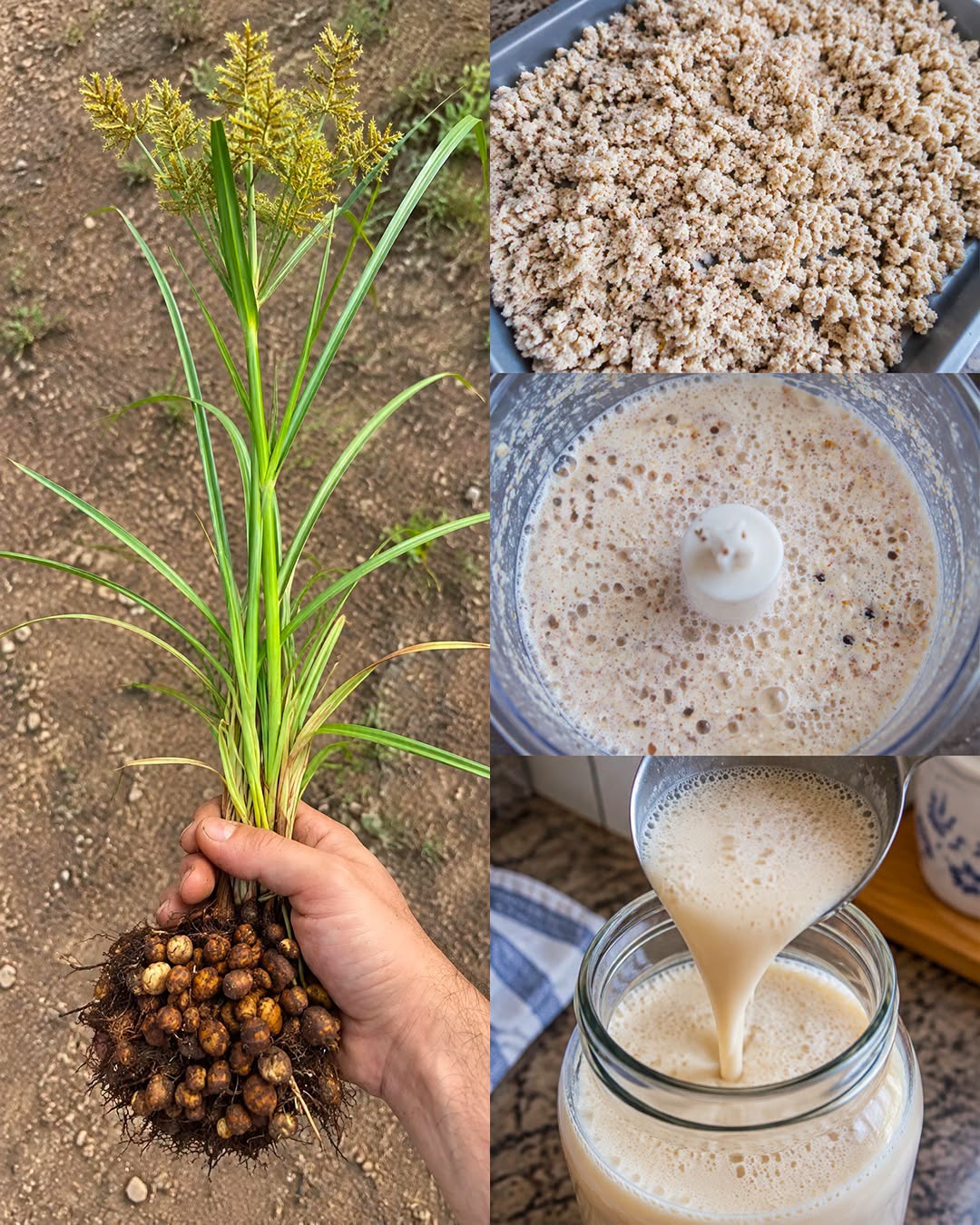
collecting the plant, carefully dig around the roots and underground stems to locate the small tubers.
Cleaning
Wash the tubers thoroughly to remove soil, grit, and other debris before eating or processing them.
Consumption
Tiger nuts can be eaten raw or roasted, soaked to soften their texture, ground into flour, or processed into a plant-based drink.
Storage
Fresh tubers should be stored appropriately and used within a reasonable period. Dried tiger nuts can generally be stored longer when kept in a cool, dry place and protected from moisture.
Cautions and Considerations
Allergies and Individual Sensitivity
Food allergies to tiger nuts are possible, even though they are not among the most common food allergens. Anyone trying them for the first time should pay attention to any unusual reaction.
Wild Harvesting
If collecting yellow nutsedge from the wild, make sure the area has not been treated with pesticides or contaminated by chemicals,
animal waste, or other pollutants. Proper identification is also important before consuming any wild plant.
Invasive Growth
Yellow nutsedge can spread aggressively in favorable conditions. If you grow it intentionally, consider how to prevent it from spreading into areas where it could become difficult to control.
The Bottom Line
Yellow nutsedge (Cyperus esculentus) may have a reputation as a troublesome weed, but its small underground tubers have a long history as a food. Tiger nuts provide fiber, fats, carbohydrates, and several micronutrients, and they can be eaten directly, processed into flour, made into tiger nut milk, or used to produce oil.
The plant also has traditional medicinal uses, but traditional use should not be confused with proven medical treatment. For beginners, the most practical way to explore yellow nutsedge is to learn how to identify it correctly, obtain food-grade tubers when possible, clean them properly, and enjoy them as part