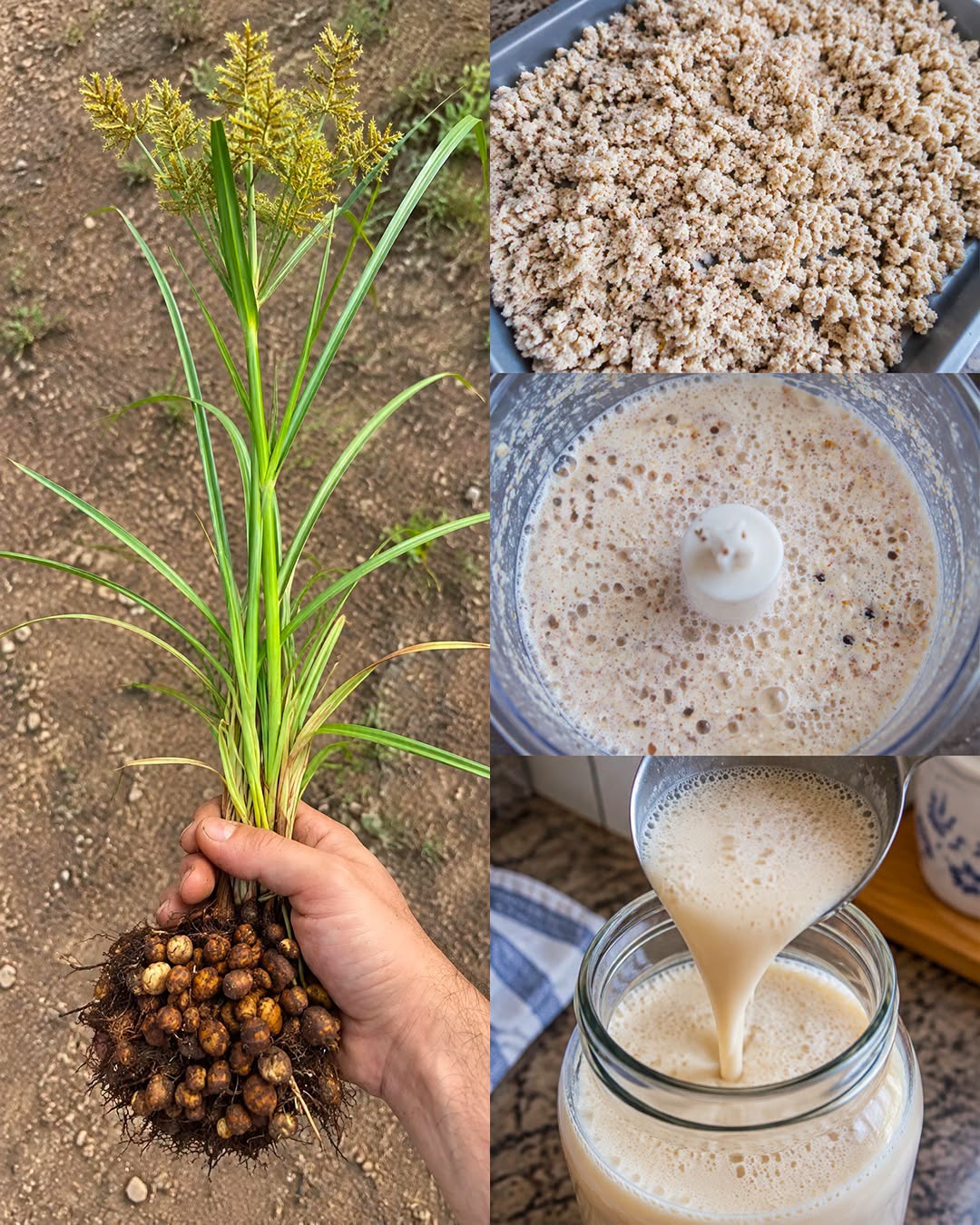
and some versions include additional sugar or other flavorings.
3. Baking and Cooking
Tiger nut flour can be used in various recipes, including breads, cookies, cakes, and other baked goods. It provides a naturally sweet and nutty flavor and can be useful in gluten-free recipes.
4. Oil Extraction
Tiger nut oil is a plant oil with a mild, pleasant flavor. It can be used in cooking and is also found in some cosmetic and personal-care products.
But tiger nuts are useful for more than food and drink—the plant itself has several practical agricultural uses worth knowing about.
Gardening and Agricultural Uses
Although farmers and gardeners may consider yellow nutsedge a troublesome weed because of how readily it spreads, the plant is hardy and adaptable.
In controlled agricultural settings, yellow nutsedge may be grown as a food crop in parts of Africa, Spain, and other regions.
also help hold soil in certain environments, although its aggressive growth can make it difficult to control where it is unwanted.
Like other flowering plants, yellow nutsedge can also interact with insects and contribute to local biodiversity.
Other Practical Uses
Cosmetic Products
Tiger nut oil is used in some skin and hair products because of its emollient and moisturizing properties.
Animal Feed
In some agricultural settings, tiger nut tubers may be used as a supplementary feed for livestock and poultry. Suitability depends on the animal, quantity, and overall diet.
Traditional Survival Food
Because the underground tubers can provide carbohydrates, fats, and fiber, tiger nuts have historically served as an important food source in some regions.
How to Collect and Use Yellow Nutsedge
Identification
Yellow nutsedge has grass-like leaves and a distinctive triangular stem. It produces clusters of yellowish to brownish flower structures and develops small underground tubers.
Continued on next page: