The good news?
Most of this is incredibly simple.
My glass cooktop safety checklist
✔ Use cookware recommended by the manufacturer.
✔ Lift heavy cookware instead of dragging it.
✔ Don’t drop pans onto the surface.
✔ Don’t place extremely hot objects on cool areas of the cooktop.
✔ Give the surface time to cool naturally.
✔ Don’t pour cold water over a very hot cooktop.
✔ Keep the bottoms of pans clean.
✔ Don’t place non-heat-resistant objects near active burners.
✔ Clean the surface using products recommended for your cooktop.
✔ Stop using the cooktop if the glass becomes cracked or significantly damaged.
That’s really it.
No complicated maintenance routine. Just a few good habits.
How to Clean a Glass Top Stove Safely
Cleaning is another area where being gentle pays off.
Wait until the cooktop has cooled sufficiently according to your appliance’s instructions.
Then use the cleaner and tools recommended by the manufacturer.
Avoid aggressive scraping, abrasive products, or anything that could scratch the surface unless your specific appliance instructions say otherwise.
And don’t treat stuck-on food like you’re trying to remove concrete!
A little patience is usually better than attacking the surface with excessive force.
What You Should Never Put on a Glass Cooktop
A glass cooktop is not an extra countertop.
Try not to use it as a place to store things, especially when burners may still be hot.
Keep away:
Plastic containers
Grocery bags
Paper products
Wooden utensils that could scorch
Dish towels
Food packaging
Aerosol products
Items that could melt
Heavy objects that could fall onto the surface
Even after cooking is finished, remember that the glass may remain hot for a while.
A Few Everyday Habits That Make a Big Difference
One thing I love about this advice is that you don’t have to change the way you cook very much.
You simply need to become aware of the surface.
Before setting something down, ask yourself:
Is this hot? Is it heavy? Is the bottom rough? Could it scratch or shock the glass?
If the answer is yes, choose another spot.
That’s a two-second decision that could save you from a very expensive repair.
Frequently Asked Questions
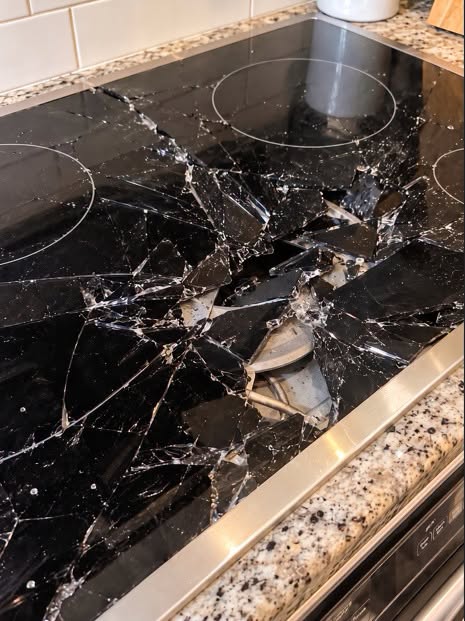
Can a glass-top stove really shatter?
Yes. Glass-ceramic cooktops are designed for normal cooking, but they can be damaged by impact, thermal stress, scratches, or other misuse. A severe crack or break can occur under the wrong conditions.
Can I put a hot pan on an unused burner?
It’s best to follow your stove manufacturer’s instructions. In general, avoid deliberately placing very hot cookware on a cool section of the glass surface because of the potential for thermal stress.
Can I use cast iron on a glass-top stove?
Some glass-top stoves permit cast-iron cookware, while others may have specific restrictions. Check the manufacturer’s instructions. If permitted, handle cast iron carefully and avoid dropping or dragging it across the surface.
Why did my glass cooktop crack?
There can be several causes, including impact, thermal stress, manufacturing defects, or damage that developed over time. Without inspecting the cooktop, it’s impossible to determine the exact cause.
Can I cook on a glass cooktop with a small crack?
It’s safest not to use a damaged cooktop until you’ve checked the manufacturer’s guidance or had it assessed by a qualified professional.
How can I prevent scratches?
Use cookware with clean, smooth bottoms, avoid dragging pans, and follow the cleaning instructions provided for your appliance.
Should I put a trivet on my glass cooktop?
A trivet isn’t automatically safe simply because it’s called a trivet. Check the manufacturer recommendations for both your cooktop and the trivet, particularly if you’re thinking about placing extremely hot cookware on the glass.
see continuation on next page