Lift it rather than dragging it whenever possible, and check your stove manufacturer’s instructions regarding cast-iron cookware.
And here’s another important point: a cast-iron pan that’s been sitting over a burner can remain dangerously hot long after you’ve turned the burner off.
Don’t move it directly onto a cool glass area just because the burner is no longer glowing.
What About Putting Cold Water on a Hot Cooktop?
This is another habit worth avoiding.
If you’ve just finished cooking and the surface is extremely hot, don’t deliberately splash cold water onto it to cool it down.
That sudden temperature change isn’t helpful.
There’s also a practical problem: water can rapidly turn to steam around very hot cookware and surfaces, creating burns and splattering hazards.
Instead, allow the cooktop to cool naturally before cleaning it.
The Right Way to Cool Your Glass Cooktop
After cooking, give the surface time to cool.
Do this instead
Turn the burners off.
Move hot cookware to an appropriate heat-resistant surface.
Keep plastic, paper towels, dishcloths, and other heat-sensitive objects away from active burners.
Allow the cooktop to cool naturally.
Clean it according to the manufacturer’s instructions.
It might take a few extra minutes, but that’s a very small price to pay for protecting an expensive appliance.
Don’t Slide Heavy Cookware Across the Surface
Here’s another habit that can cause trouble.
Dragging cookware across a glass cooktop.
Even if the pan doesn’t crack the glass, its bottom can scratch the surface.
And scratches aren’t merely cosmetic in the long run. A damaged surface may be more susceptible to further damage.
Instead, lift cookware when moving it.
Yes, even that giant skillet you just filled with dinner!
Check the Bottom of Your Cookware
Before using cookware on a glass cooktop, take a quick look at the bottom.
You want it to be:
Flat
Clean
Free from rough debris
Free from damaged edges
Appropriate for your particular cooktop
A grain of hardened food or another piece of debris trapped underneath a heavy pan can create a concentrated pressure point.
That’s an easy problem to prevent.
What If Something Does Crack the Glass?
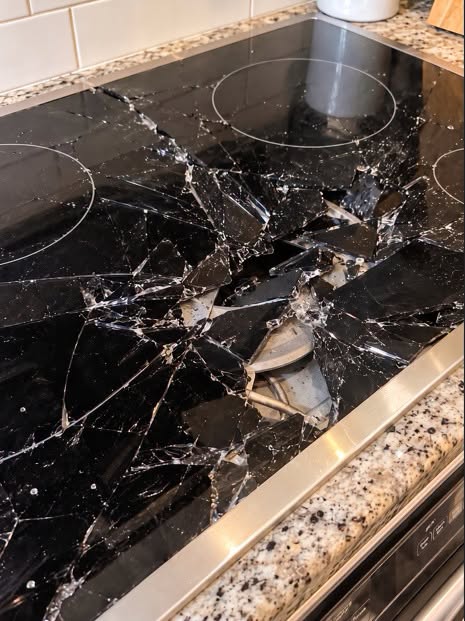
If you notice a crack, chip, or significant damage to your glass cooktop, stop using the affected cooktop and follow the manufacturer’s safety instructions.
Don’t assume a small crack is harmless.
Don’t tape over it and keep cooking.
And don’t attempt a makeshift repair.
Depending on the location and severity of the damage, the cooktop may need professional inspection or replacement.
Watch for These Warning Signs
Pay attention to:
A visible crack
A spreading crack
A chip in the cooking surface
A section of glass that appears lifted or distorted
Unexpected damage around a burner
Electrical problems or unusual behavior
If the damage is accompanied by smoke, sparks, burning smells, or another electrical concern, turn the appliance off if it is safe to do so and seek appropriate professional assistance.
Can You Still Use a Cracked Glass Cooktop?
This isn’t something I’d recommend experimenting with.
A glass cooktop is both a cooking surface and part of an electrical appliance. A crack can compromise the surface and potentially allow moisture or other substances to reach areas they shouldn’t.
The safest approach is to stop using the damaged area and consult the manufacturer’s guidance or a qualified appliance professional.
How to Prevent Glass Cooktop Damage
see continuation on next page