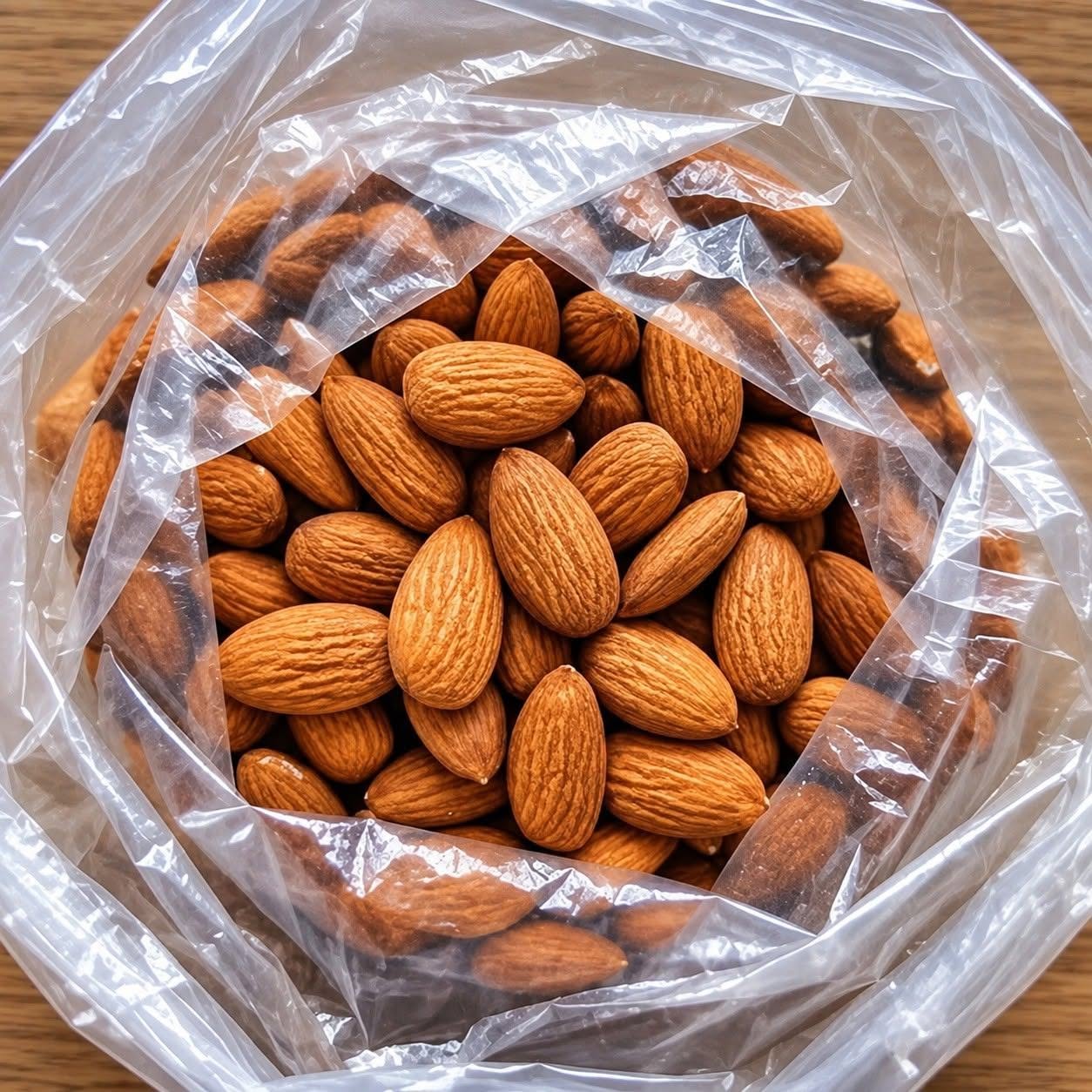
Can Almonds Make You Gain Weight?
They can contribute to weight gain if you consistently consume more calories than your body needs.
But this is not unique to almonds.
Any calorie-containing food can contribute to weight gain when consumed in excess.
The interesting thing about almonds is that research on nuts often does not show the degree of weight gain one might predict based simply on their calorie content.
This may be related to satiety, energy compensation, and incomplete absorption of some fat from whole nuts.
Nevertheless, calories still matter.
If you’re trying to gain weight, almonds can be useful.
If you’re trying to lose weight, portion control is important.
Can Almonds Help You Build Muscle?
Almonds provide plant protein, but they are not a particularly concentrated protein source compared with foods such as eggs, dairy, legumes, meat, fish, or soy.
They can contribute to total protein intake.
But if your goal is muscle growth, almonds should be viewed as one component of the diet rather than your primary protein source.
Resistance training plus adequate total protein and energy intake is much more important.
Are Almonds Good for Older Adults?
Nutrient-dense foods can be especially valuable as people age.
Older adults may have increased nutritional needs for certain nutrients while sometimes eating smaller quantities of food.
Almonds provide:
Protein
Fiber
Magnesium
Vitamin E
Healthy fats
However, chewing ability, swallowing difficulties, and digestive tolerance need to be considered.
For someone with dental problems or swallowing difficulties, almond butter or finely ground almonds may be safer than whole nuts.
Can Children Eat Almonds?
Nuts can be nutritious for children, but age and choking risk matter.
Whole nuts can pose a choking hazard to young children.
Parents and caregivers should follow age-appropriate feeding guidance and consider safer forms such as finely ground nuts or smooth nut butter when appropriate.
And of course, children with known allergies need to avoid the relevant allergens according to medical advice.
The Difference Between Almonds and Almond Milk
Almond milk is not nutritionally equivalent to whole almonds.
Whole almonds contain the entire nut, including its fiber and substantial amounts of protein and fat.
Many almond milk products contain relatively little almond material and may be fortified with vitamins and minerals.
Some are sweetened.
Others are unsweetened.
So if you’re looking for the nutritional benefits associated with whole almonds, don’t assume that drinking almond milk provides the same package.
Check the nutrition label.
Why Whole Almonds Are Often the Better Choice
Whole almonds require chewing.
That alone can influence how quickly you eat them.
They also retain their natural matrix of fat, fiber, protein, and plant material.
This makes them more filling than many processed almond-based products.
Whole foods generally provide a complex nutritional structure that can be different from isolated nutrients or highly processed versions.
That’s one reason nutrition advice often emphasizes minimally processed foods.
What Doctors Really Mean When They Recommend Nuts
When healthcare professionals recommend nuts, they usually aren’t saying:
“Eat almonds and you’ll never get sick.”
The recommendation is more nuanced.
Nuts can be part of a dietary pattern rich in:
Vegetables
Fruits
Whole grains
Legumes
Fish or other healthy protein sources
Unsaturated fats
Nuts and seeds
This type of dietary pattern is associated with better cardiovascular and metabolic health.
The benefit comes from the pattern.
Not from one food acting like medicine.
A Simple Daily Almond Routine
If you enjoy almonds and want to include them regularly, you don’t need a complicated plan.
A simple approach could be:
Morning:
Add a small serving to yogurt or fruit.
Afternoon:
Use a measured portion as a snack instead of cookies or chips.
Dinner:
Add chopped almonds to a salad or vegetable dish.
You don’t need almonds at every meal.
One serving a day is enough to make them part of your dietary pattern.
What Kind of Almonds Should You Choose?
If your goal is everyday nutrition, consider:
Plain almonds:
Simple and versatile.
Continued on next page: