Or:
“Your brain will become sharper.”
Or:
“Your skin will become younger.”
Real biology is more complicated.
If you replace a less nutritious snack with almonds consistently, your overall nutrient intake may improve.
Your diet may contain more fiber, magnesium, vitamin E, and unsaturated fats.
Your cholesterol or other metabolic markers may change modestly over time in response to the overall dietary pattern.
But you should not expect dramatic overnight transformations.
Health improvements generally happen gradually.
What Happens After Six Months?
Longer-term dietary habits matter more than short-term challenges.
If eating almonds every day helps you establish a consistent pattern of choosing whole or minimally processed foods, that can be meaningful.
You may also become less dependent on highly processed snacks.
But if you simply add almonds to an otherwise unhealthy diet, the overall effect may be much smaller.
The body responds to patterns.
Not isolated foods.
The Bigger Picture: What Do You Eat With Your Almonds?
This is an important question.
Almonds can be combined with:
Fruit
Yogurt
Oatmeal
Whole-grain cereal
Salads
Smoothies
Vegetables
Whole-grain toast
The nutritional impact depends partly on the entire meal.
For example, a small serving of almonds with plain yogurt and fruit creates a very different meal from almonds covered in sugar and chocolate.
The almond itself hasn’t changed.
The dietary context has.
Almonds and Breakfast
Adding almonds to breakfast can be an easy way to increase protein, fiber, and healthy fats.
You could add a small serving to:
Greek yogurt
Fruit
Whole-grain cereal
Smoothies
Whole-grain toast with almond butter
The combination of protein, fiber, and fat can make breakfast more satisfying.
But remember that a healthy breakfast doesn’t need almonds specifically.
Other nuts and seeds can provide similar benefits.
Almonds as an Afternoon Snack
This is where almonds may be particularly practical.
Many people experience hunger between lunch and dinner.
A measured serving of almonds can provide a convenient snack without requiring preparation.
The key word is measured.
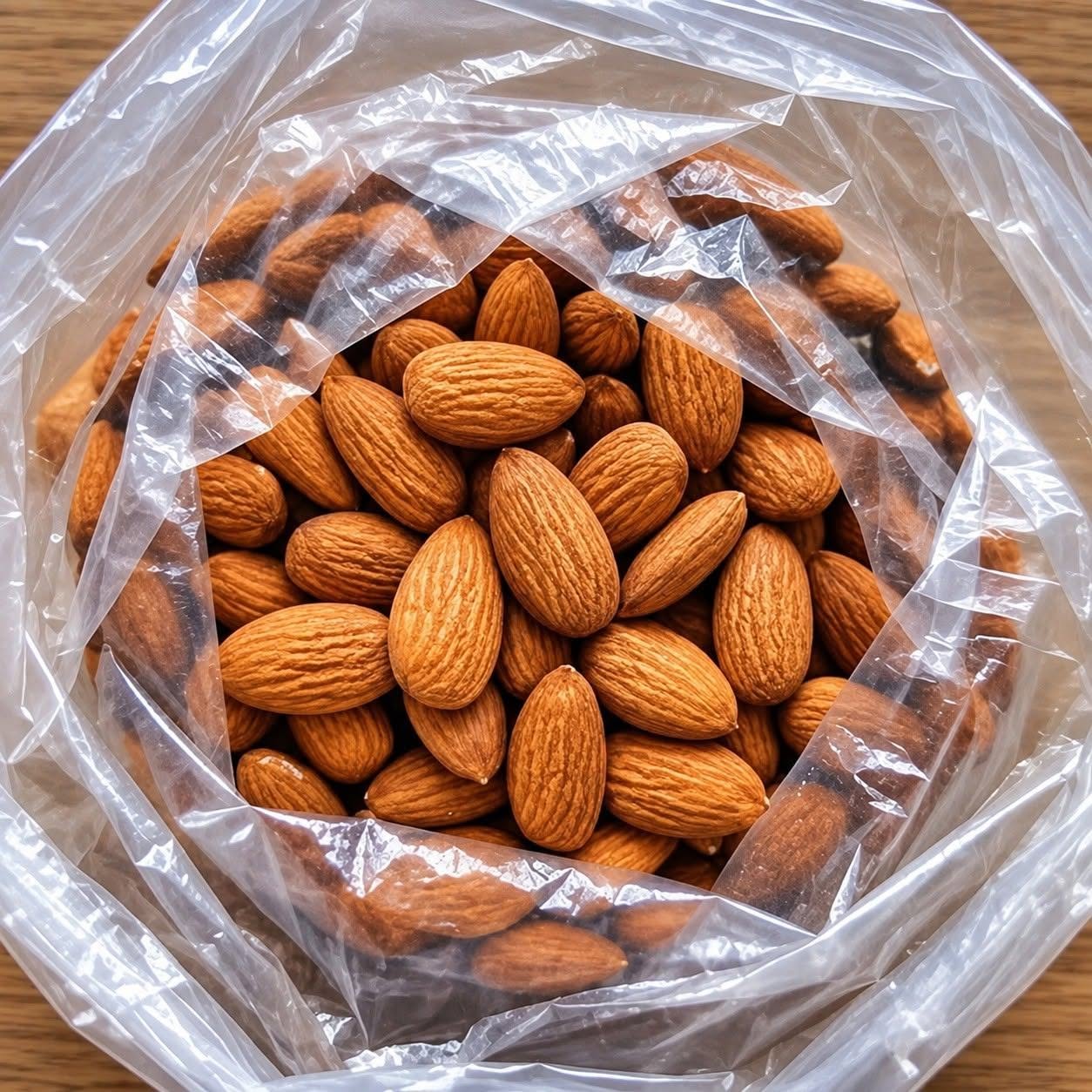
If you eat directly from a large bag, it is easy to lose track of how much you’ve consumed.
Instead, place a serving into a small container.
That simple habit can make portion control much easier.
What If You Eat Almonds Before Bed?
There is no special biological rule saying almonds must be eaten in the morning.
Some people enjoy them as an evening snack.
Because they contain fat, protein, and fiber, they may be satisfying.
But eating them immediately before bed does not create a special fat-burning effect.
And if eating a large amount causes digestive discomfort, an evening snack may interfere with sleep.
Your total dietary pattern matters more than the exact time of day.