Frequently Asked Questions
Q: Can slime mold make me sick?
A: No known health risks are associated with household slime mold. It’s not pathogenic to humans.
Q: Will it come back after I clean it?
A: It can, if the same damp, organic-rich conditions return. Focus on moisture control, and recurrence becomes unlikely.
Q: Should I use bleach or harsh cleaners?
A: Not necessary. Slime mold is easily removed with soap and water. Harsh chemicals aren’t required and can irritate your lungs or damage surfaces.
Q: Is this a sign my home is unhealthy?
A: Not at all. Slime mold appears in clean and less-clean homes alike. It’s a response to temporary environmental conditions, not a judgment on your housekeeping.
Q: Can pets or children interact with it safely?
A: While slime mold itself isn’t toxic, it’s still best to keep curious hands and paws away from unknown substances. Clean it up promptly as a general hygiene practice.
A Note on Perspective
Finding something strange in your home can feel like a breach of control. But slime mold isn’t an invader—it’s a visitor, responding to the same warmth and moisture that make your home comfortable for you.
Its presence isn’t a failure. It’s a reminder that our living spaces exist within a larger, living world. And sometimes, that world taps gently on the door—not to harm, but simply to exist.
Final Thoughts
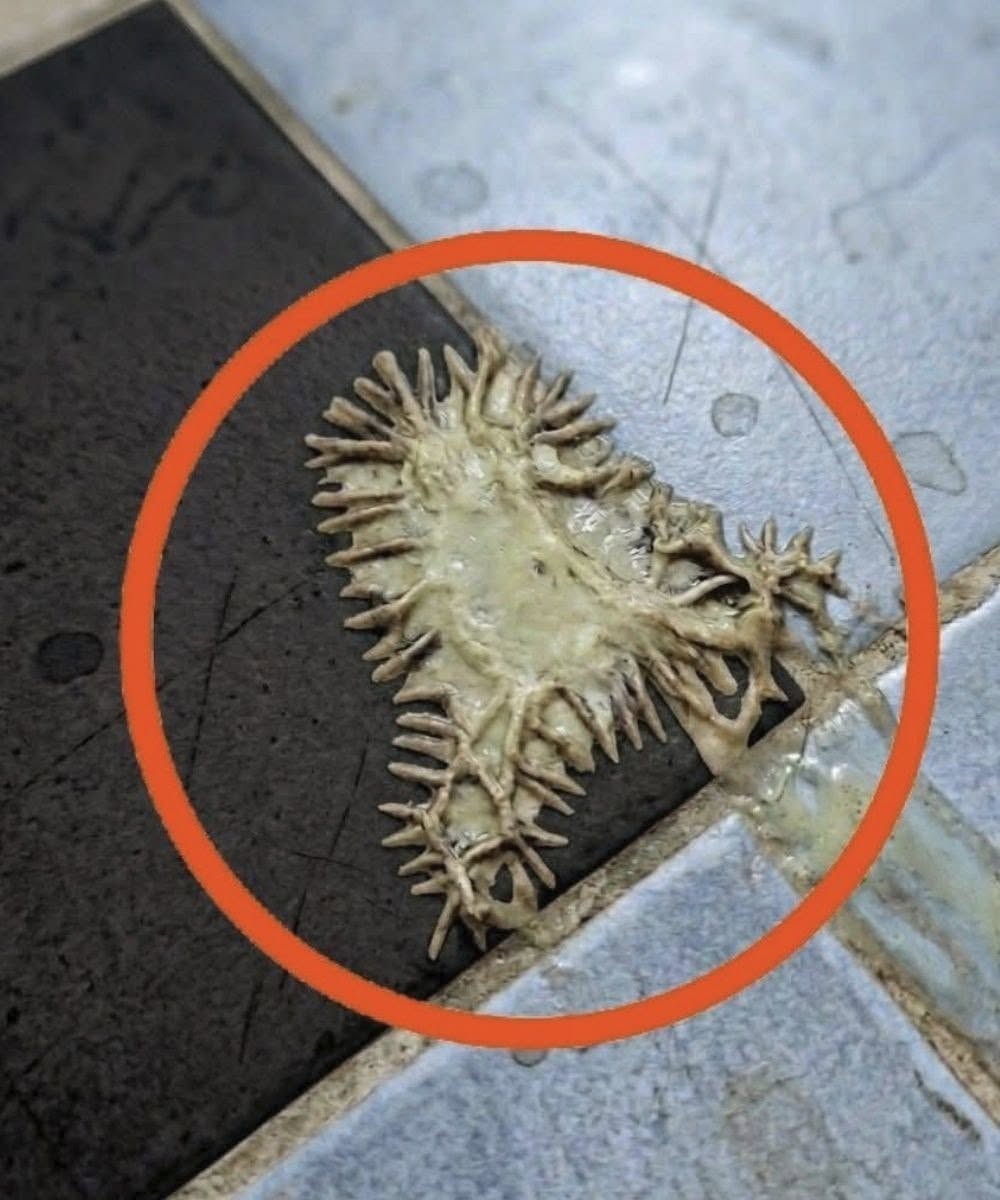
That mysterious blob on your bathroom floor? It’s not a warning. It’s not a threat. It’s a quiet lesson in biology, humidity, and the gentle unpredictability of the natural world.
Remove it calmly. Adjust your habits if needed. And carry on, knowing that your home—and your peace of mind—remain intact.
If this article helped ease your concerns or satisfy your curiosity, I’d love to hear from you. Have you encountered slime mold before? How did you handle it? Share your story below. And if you know someone who’s ever been unsettled by a mysterious household visitor, please pass this along.