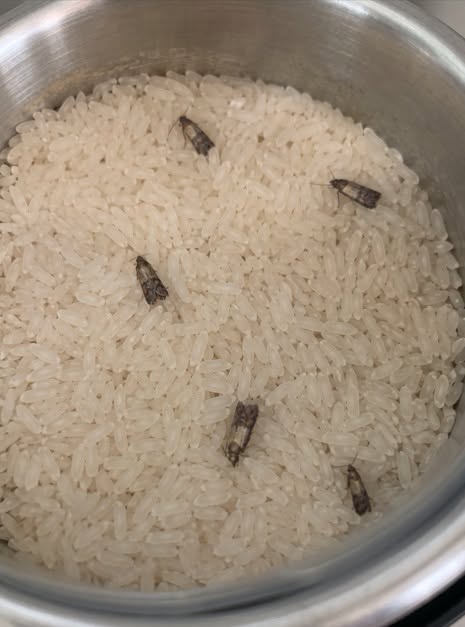
This isn’t about spraying the pantry and hoping for the best.
The goal is to tackle the infestation from several directions:
- Find the source
- Throw away infested food
- Thoroughly clean the pantry
- Remove eggs and larvae hiding nearby
- Monitor for remaining adults
- Store susceptible foods properly
- Keep checking for several weeks
The biggest benefit is that you’re dealing with the cause, not just the visible moths.
And honestly? Once you understand that, pantry moths become much less mysterious.
What Pantry Moths Eat
This is where things get interesting.
Pantry moths can infest many common dry foods, including:
- Flour
- Rice
- Pasta
- Cereal
- Oatmeal
- Cornmeal
- Baking mixes
- Crackers
- Bread and breadcrumbs
- Nuts
- Seeds
- Dried fruit
- Spices
- Pet food
- Birdseed
- Chocolate
- Powdered foods
- Other dry packaged goods
That forgotten bag of flour in the back of the cupboard?
Check it.
The half-used bag of rice?
Check that too.
And don’t forget pet food or birdseed if you keep those indoors.
What You’ll Need
You don’t need a cupboard full of specialty pest-control products.
For a thorough pantry cleanout, gather:
- Large trash bags
- A vacuum cleaner with a crevice attachment
- Warm soapy water
- Clean cloths or paper towels
- A bucket
- Airtight food-storage containers
- A pantry moth pheromone trap for monitoring adult moth activity
- A flashlight
Optional:
- A toothbrush or small cleaning brush for shelf corners
- Labels and a marker for dating containers
The vacuum is especially important because eggs, larvae, and pupae can hide in tiny cracks and crevices.
How to Get Rid of Pantry Moths Step by Step
see continuation on next page