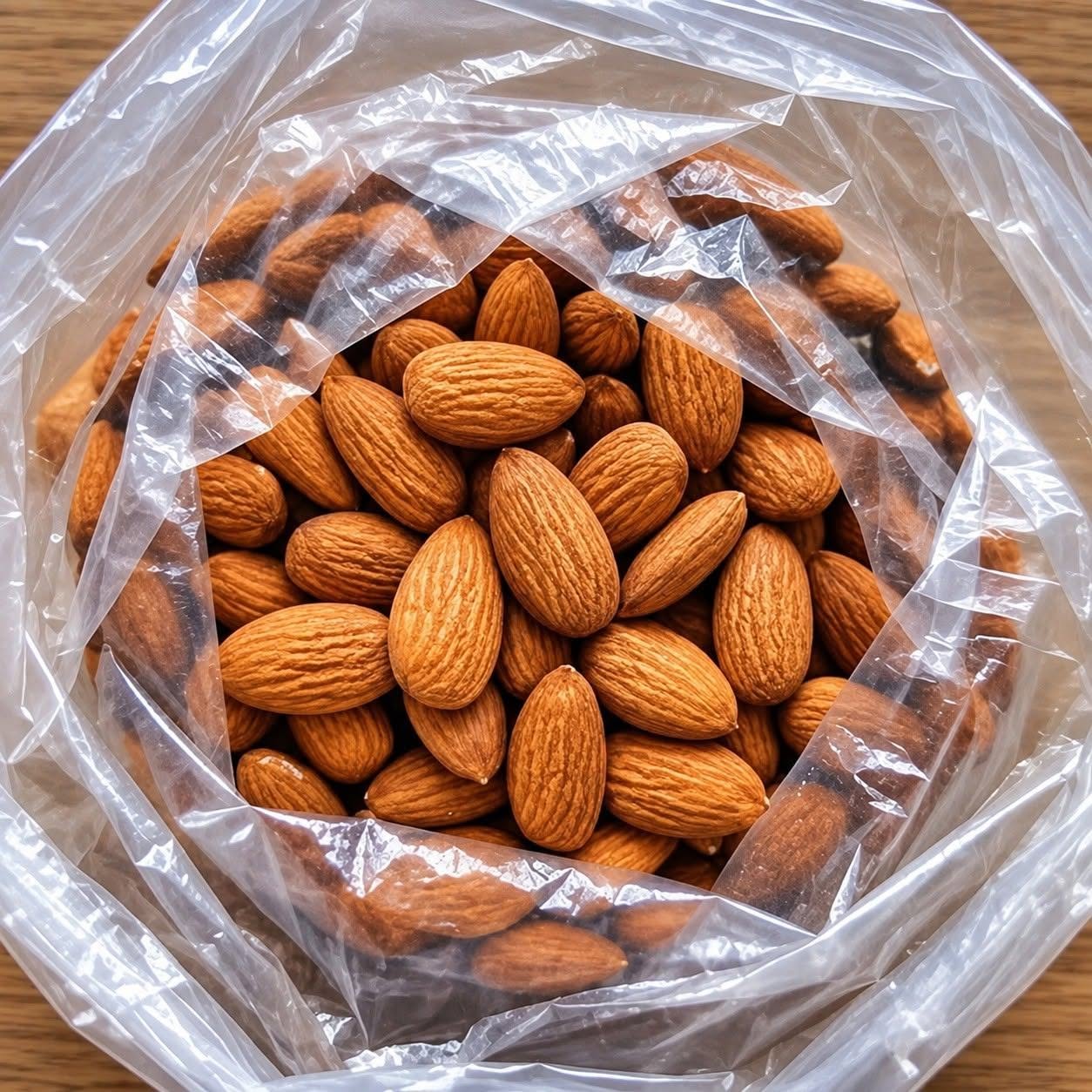
1. Your Heart May Benefit
One of the most researched potential benefits of eating nuts regularly is cardiovascular health.
Almonds contain predominantly unsaturated fats, along with fiber and other plant compounds.
When almonds replace high in saturated fat or refined carbohydrates, the overall dietary pattern may become more favorable for cardiovascular health.
Research on nuts has generally found associations between regular nut consumption and improved cardiovascular outcomes.
But the important detail is replacement.
Eating almonds on top of an already excessive-calorie diet is not the same as replacing cookies, pastries, processed snacks, or other less nutritious foods with almonds.
The quality of the overall dietary pattern matters.
Think of almonds as a substitution rather than a magic ingredient.
Instead of reaching for a sugary snack in the afternoon, you might choose a small serving of almonds.
That change can improve the nutritional quality of the snack.
2. Your Cholesterol Profile May Improve
Another reason almonds receive attention is their potential effect on blood lipids.
Studies have found that regular almond consumption can modestly improve certain cholesterol measures in some people, particularly when almonds replace foods higher in saturated fat.
The exact effect varies from person to person.
But almonds provide several components that may contribute:
Monounsaturated fats
Polyunsaturated fats
Fiber
Plant sterols
Antioxidant compounds
These nutrients can work together within an overall heart-healthy eating pattern.
It is important to remember that cholesterol is only one part of cardiovascular risk.
Blood pressure, blood sugar, smoking, physical activity, genetics, age, and other factors also matter.
So eating almonds does not eliminate the need to manage other cardiovascular risk factors.
3. You May Feel Full for Longer
This is one of the most practical benefits of almonds.
Almonds contain a combination of fat, protein, and fiber.
These nutrients can increase satiety—the feeling that you have had enough to eat.
Imagine two afternoon snacks.
One is a highly processed sugary snack that is quickly digested.
The other is a modest serving of almonds.
The second option provides fat, protein, and fiber, which may help you feel satisfied for longer.
That can be useful if you’re trying to reduce unnecessary snacking.
But there is an important distinction:
Almonds don’t automatically cause weight loss.
They can support a healthy eating pattern, but they still contain a substantial amount of energy.
Portion control matters.
4. Almonds May Help With Weight Management
This may sound contradictory.
Almonds are relatively high in calories, yet research suggests that regular nut consumption does not necessarily lead to weight gain and may be compatible with weight management.
There are several possible explanations.
First, nuts are filling.
Second, people may naturally compensate for the calories from nuts by eating less later.
Third, not all of the fat and energy in whole nuts may be fully absorbed because some remains trapped within the plant cell structure.
And fourth, replacing highly processed snacks with nuts changes the overall nutritional quality of the diet.
But none of this means you can eat unlimited almonds.
A large bowl of almonds can contain a lot of calories.
The nutritional lesson is simple:
Nutrient-dense does not mean calorie-free.
5. Your Blood Sugar May Respond More Favorably
Almonds contain very little carbohydrate compared with many conventional snack foods.
They also provide fat, protein, and fiber.
That combination can make them a useful food choice for people who want to avoid snacks that produce rapid increases in blood glucose.
Research has investigated the role of nuts, including almonds, in metabolic health and diabetes management.
Some studies suggest that incorporating almonds into meals may improve aspects of glucose and insulin responses, particularly when almonds replace refined carbohydrate foods.
However, almonds should not be considered a treatment for diabetes.
Continued on next page: