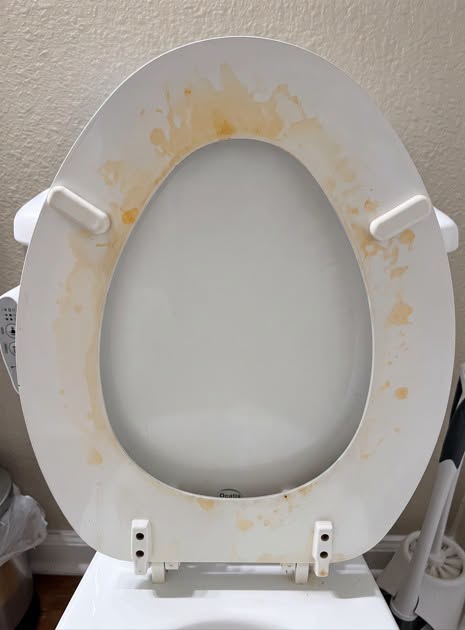
For a stubborn mineral ring, one of the simplest approaches is using a wet pumice stone specifically intended for cleaning toilets.
Yes, a pumice stone.
I know. It sounds like something that could turn into a disaster.
But when used correctly, a toilet-cleaning pumice stone can gently remove mineral deposits from porcelain.
The key word is gently.
You don’t want to attack the bowl like you’re sanding down a piece of furniture.
What You’ll Need
You don’t need a cabinet full of cleaning products.
Gather:
A toilet-cleaning pumice stone
Toilet bowl cleaner
Rubber cleaning gloves
A toilet brush
Water
Paper towels or a cleaning cloth
A small bucket can also be useful if you need extra water for keeping the pumice stone wet.
Before You Start: Check the Toilet Surface
This step matters!
Pumice is abrasive, so you should only use it carefully on appropriate porcelain surfaces.
Don’t assume every toilet has the same finish.
If you’re unsure, check the manufacturer’s cleaning instructions first.
And never use an abrasive stone on delicate, coated, plastic, acrylic, or specialty surfaces unless the manufacturer specifically says it’s appropriate.
For a standard glazed porcelain toilet, a pumice stone designed for toilet cleaning can be useful for stubborn mineral buildup.
Step 1: Lower the Water Level
Start by flushing the toilet.
If the yellow ring sits right at the waterline, lowering the water level can make the stained area easier to reach.
You don’t necessarily need to empty the bowl completely.
You just want enough access to work directly on the buildup.
Step 2: Wet the Pumice Stone
This is extremely important.
Keep both the pumice stone and the porcelain wet.
Don’t use a dry pumice stone on the toilet.
A dry abrasive stone can scratch or damage the surface.
Soak the stone thoroughly and keep adding water as you work.
Step 3: Gently Rub the Stained Area
Now comes the satisfying part.
Place the wet pumice stone against the mineral ring and gently rub the stained area.
Don’t press aggressively.
Use small, controlled motions.
You’ll probably notice the buildup beginning to disappear.
And honestly?
This is one of those cleaning moments where you finally get that little “Ohhh, there it is!” feeling.
The bowl starts looking white again.
Step 4: Keep Checking Your Progress
Don’t get carried away.
Stop every so often and inspect the area.
You’re trying to remove the deposit—not remove the surface underneath it.
Keep the stone and porcelain wet, use light pressure, and concentrate only on the affected area.
If the stain isn’t improving, stop and reassess rather than simply scrubbing harder.
Step 5: Flush and Clean Normally
Once the visible buildup has been removed, flush the toilet.
Then clean the bowl with your normal toilet cleaner according to the product directions.
Use the toilet brush to clean around the bowl and under the rim.
Give everything a final flush.
And there it is.
A much cleaner-looking toilet without that ugly yellow ring staring back at you.
What If You Don’t Have a Pumice Stone?
There are other approaches worth trying, particularly when the buildup is relatively mild.
White Vinegar
White vinegar can help with some mineral deposits because its acidity can dissolve certain types of buildup.
You can apply vinegar to the affected area and allow it time to work before scrubbing.
However, vinegar isn’t magic.
A thick, old mineral ring may require mechanical removal or a product specifically designed for mineral deposits.
Citric Acid
Citric acid is another acidic option that can help loosen mineral deposits.
It’s commonly used in household descaling products because it reacts with mineral buildup.
Again, follow the product instructions carefully and rinse the toilet afterward.
Commercial Limescale Remover
A cleaner specifically formulated for limescale or mineral deposits may be more effective than an ordinary toilet cleaner.
Always read the label before use.
A Very Important Cleaning Rule: Don’t Mix Cleaners
This deserves its own section because it’s incredibly important.
Never mix household cleaning products unless the manufacturer specifically says the combination is safe.
In particular, don’t mix bleach with acids such as vinegar or acidic toilet cleaners.
Dangerous gases can be produced.
Use one product at a time, follow its instructions, and rinse thoroughly before switching to another type of cleaner.
Open a window or use appropriate ventilation while cleaning.
Your bathroom doesn’t need to become a chemistry experiment!
What About Baking Soda?
Baking soda is popular for household cleaning, but it’s not always the miracle solution people expect.
It can help with odors and light grime, but a hard mineral ring is a different problem.
If you’re dealing with thick limescale or mineral deposits, an appropriate descaling product or careful mechanical removal may work better.
What About Bleach?
Bleach can be useful for certain cleaning and disinfecting tasks, but it’s not necessarily the answer to a mineral ring.
If the yellow discoloration is caused by hard-water deposits, bleach may not remove the underlying mineral buildup.
And remember:
Never mix bleach with vinegar, acidic toilet cleaners, ammonia, or other incompatible cleaning products.
Always follow the label.
Continued on next page: