fresh and properly handled before it is frozen.
It should also be stored in a freezer that maintains an appropriate temperature.
Once milk has been thawed, it should be treated like other perishable refrigerated foods.
If it develops an unusual odor, obvious spoilage, or another concerning change, it should not be consumed simply because it was previously frozen.
The freezer extends storage time; it doesn’t reverse spoilage that has already occurred.
Should You Freeze Milk in the Original Carton?
This depends on the type of container.
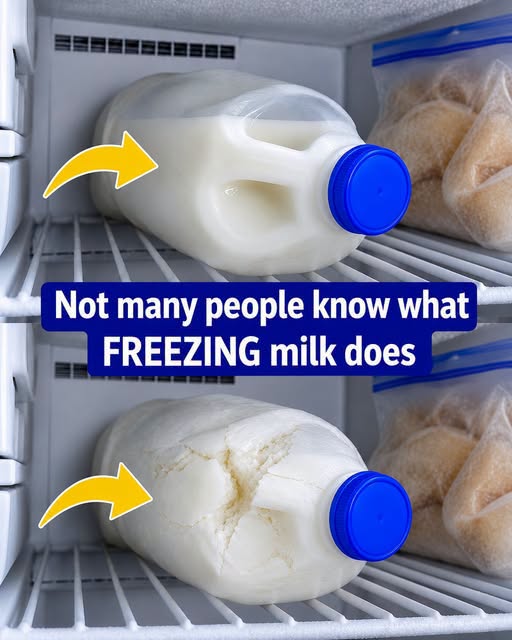
If you’re considering freezing milk in its original packaging, remember that liquids expand when they freeze.
A completely full container may not have enough room for that expansion.
This can cause the container to bulge, crack, or leak.
For that reason, leaving a little space at the top is important if the container allows it.
Another option is transferring milk into a freezer-safe container
designed to accommodate expansion.
Whatever container you choose, make sure it is clean, food-safe, tightly closed, and appropriate for freezer storage.
Don’t Fill the Container to the Top
This is one of the easiest mistakes to make.
Milk contains a large amount of water, and water expands as it freezes.
If you fill a container completely and seal it tightly, the expanding liquid needs somewhere to go.
That pressure can damage the container.
Leaving some headspace gives the milk room to expand.
The amount of space needed depends on the shape and type of container, so following the manufacturer’s freezer-storage guidance is a good idea.
Can You Freeze Milk in Smaller Portions?
Absolutely, and portioning can make the process much more convenient.
Instead of freezing a large container, you can divide the milk into smaller freezer-safe containers.
That way, you only thaw the amount you expect to use.
Continued on next page: