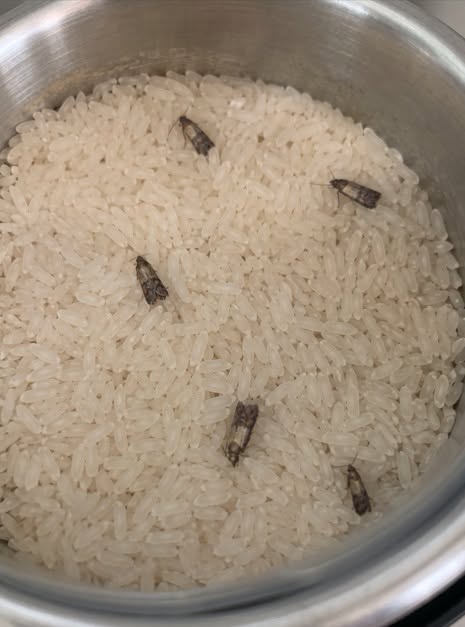
If you’ve ever opened a cupboard and watched a tiny moth flutter out, you know that sinking feeling.
Because seeing one pantry moth usually means it’s time to investigate.
These little pests have a frustrating talent for turning a peaceful pantry into their own personal nursery. And the worst part? The moths flying around your kitchen aren’t usually the real problem. Somewhere in your dry food, pantry shelves, or forgotten package, their larvae may already be feeding and growing.
The good news is that you absolutely can get rid of pantry moths. The trick is to stop focusing only on the adult moths and break the entire life cycle.
And once you do that, a few simple storage habits can make a huge difference in keeping them from coming back.
So grab a trash bag, roll up your sleeves, and let’s clean out that pantry!
Love practical home tips like this? Subscribe by email so you don’t miss the next simple cleaning, organizing, and household solution.
What Are Pantry Moths?
“Pantry moth” is a common name for several moth species that can infest stored food. One of the most common is the Indian meal moth.
They’re small, usually grayish or brownish, and you may notice them flying around your kitchen in the evening or when you open a cupboard.
But here’s the important part:
The adult moth is not the stage that’s eating your food.
The larvae are.
Female moths lay eggs in or near suitable food sources, and the larvae feed on dry pantry goods as they develop. Eventually, mature larvae may crawl away from the food and hide in cracks, corners, ceilings, or other sheltered spots before pupating.
That’s why simply killing the moths you see rarely solves the problem.
There can be much more going on behind the scenes.
Why I Hate Pantry Moths So Much
Pantry moth infestations are especially annoying because they can be surprisingly difficult to spot at first.
You might notice:
- A tiny moth flying around the kitchen
- Small caterpillar-like larvae
- Fine webbing inside food packages
- Clumped or sticky-looking grains
- Tiny holes or damage in packaging
- Larvae or cocoons around shelves and corners
- Food that suddenly seems “off”
And sometimes you don’t notice anything until you discover a moth sitting on the wall.
That’s when I start checking everything.
Because pantry moths aren’t picky enough to make this easy.
Why You’ll Love This Pantry Moth Method
see continuation on next page