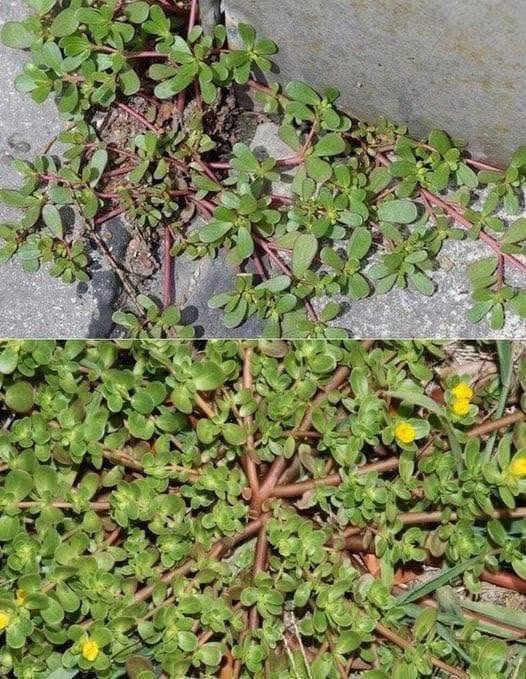
Oh, my dear friend, have you ever been out in the garden, happily tending to your plants, only to spot a sprawling, fleshy-leaved little plant and immediately reach to pull it out as a pesky weed?
I must confess, I used to do the exact same thing! But as I’ve learned over my 87 years, nature rarely makes mistakes. That little plant, often called “fat grass” or, more commonly, purslane (Portulaca oleracea), is actually one of the most nutritious, resourceful greens you can find.
Living alone in my cozy farmhouse for the past eight years has taught me to deeply appreciate the quiet, hidden gifts of the earth. As a former physician who completed my residency many decades ago, I am always delighted when modern science validates what traditional, frugal cooks have known for generations: this humble “weed” is a genuine nutritional powerhouse.
So, I put the kettle on, poured myself a warm mug of my grandmother’s traditional Southern “church coffee” (you know, the kind with a tiny pinch of salt and an egg to smooth out the flavor!), and settled into my favorite armchair. (Thanks to my hip replacement surgery a few years ago, I can now sit comfortably for long periods without that old, familiar ache!). Let’s gently explore the science behind this remarkable plant, so you can enjoy it with absolute confidence and peace of mind.
The Science of the “Weed”: Why Purslane is a Superfood
Purslane is valued for its high water content, fiber, vitamins, minerals, and unique plant compounds. While it is a wonderful addition to a healthy lifestyle, as a doctor, I must gently emphasize: it is a food, not a medical treatment. It supports wellness, but it does not replace prescribed medications.
Here is what makes it so special:
- Plant-Based Omega-3s: It contains alpha-linolenic acid (ALA), a plant form of Omega-3. While it doesn’t replace the EPA and DHA found in fatty fish, it is a fantastic, vegetarian-friendly way to support heart health as part of a balanced diet.
- A Shield of Antioxidants: Rich in beta-carotene, vitamin C, and vitamin E, it helps the body gently cope with oxidative stress. Vitamin C supports collagen formation for healthy skin, while beta-carotene (which the body converts to vitamin A) is wonderful for maintaining good vision.
- Mineral Rich: It provides a lovely boost of potassium, magnesium, calcium, and iron.
- Hydrating and Low-Calorie: Its fleshy leaves are packed with water and fiber (including soothing mucilage), making it incredibly refreshing in summer salads and supportive of healthy digestion.
Your “Garden-to-Table” Toolkit:
see continuation on next page