The Issue: Slow cookers trap steam, meaning there is virtually no evaporation. Using stovetop liquid amounts will result in soupy, diluted results.
The Fix: Follow slow cooker-specific recipes, which typically require ½ to ⅔ less liquid than stovetop versions. If the sauce is too thin at the end, thicken it with a cornstarch slurry.
11. Frozen Meat (Large Cuts)
The Issue: Large frozen cuts take too long to reach safe internal temperatures. This allows the meat to linger in the “danger zone” (40°F–140°F) where bacteria can grow rapidly.
The Fix: Always thaw meat completely in the refrigerator before adding it to the slow cooker. If you must use frozen meat, cut it into smaller pieces to ensure it heats through safely.
Bonus Tip: Don’t Overfill Your Slow Cooker
Proper capacity is crucial for safety and performance.
The Rule: Fill your slow cooker between ½ and ⅔ full.
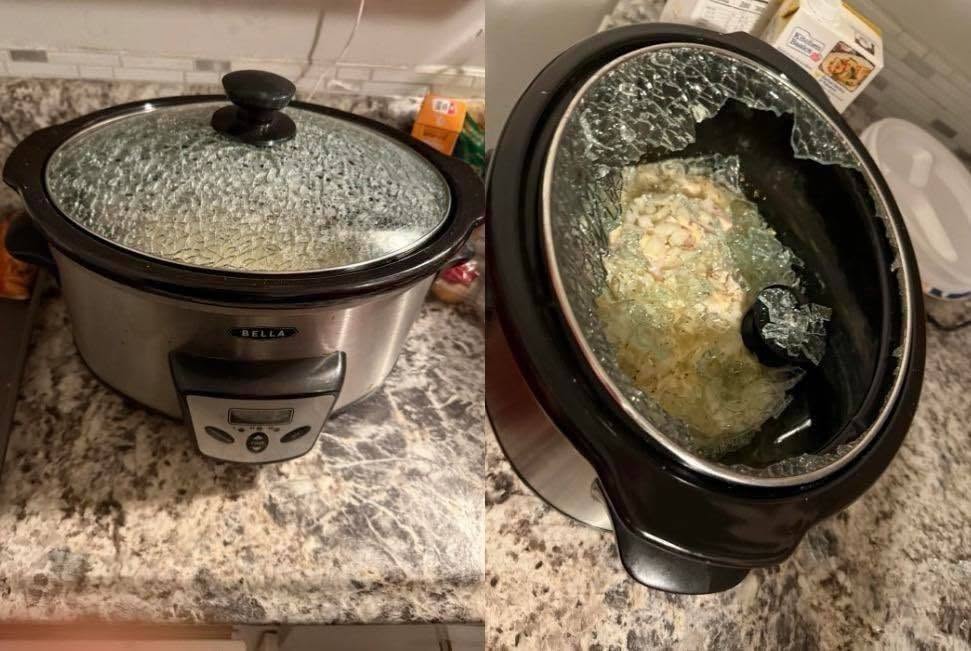
Too Full: Leads to uneven cooking and potential spillage.
Too Empty: Can cause food to burn or cook too quickly.
Why It Matters: Proper fill levels ensure heat circulates correctly, cooking food evenly and safely.
Frequently Asked Questions
Q: Can I ever put cheese in a slow cooker?
A: Yes, but timing is key. Add hard cheeses or cream cheese at the very end of cooking to prevent separation. Processed cheeses (like Velveeta) melt more smoothly but should still be added late.
Q: Is it safe to cook frozen chicken thighs?
A: It is generally recommended to thaw all meat before slow cooking to ensure it passes through the danger zone quickly. If cooking from frozen, ensure the internal temperature reaches 165°F rapidly, though thawing is safer.
Q: Why does my slow cooker meal always come out watery?
A: This is usually due to too much liquid or vegetables releasing water during cooking. Reduce liquid amounts compared to stovetop recipes and consider thickening sauces at the end.
Q: Can I use quick-cooking oats in a slow cooker?
A: It is better to use old-fashioned or steel-cut oats for slow cooker breakfasts. Quick-cooking oats may turn mushy over several hours.
Q: Do I need to brown meat for every slow cooker recipe?
A: While not strictly required for safety if cooking thoroughly, browning adds significant flavor and improves texture. It is highly recommended for ground meats and large cuts.
Final Thought
Your slow cooker is a powerful tool—but it’s not magic. The best slow cooker meals respect what each ingredient needs to thrive. Dairy needs cool temperatures, delicate greens need brevity, and meat needs safe thawing.
By avoiding these common pitfalls, you’ll transform good recipes into great, foolproof feasts every time. Understanding the limitations of your appliance allows you to work with them, ensuring every meal is safe, textured perfectly, and bursting with flavor. Respect the ingredients, and your slow cooker will reward you with countless delicious memories