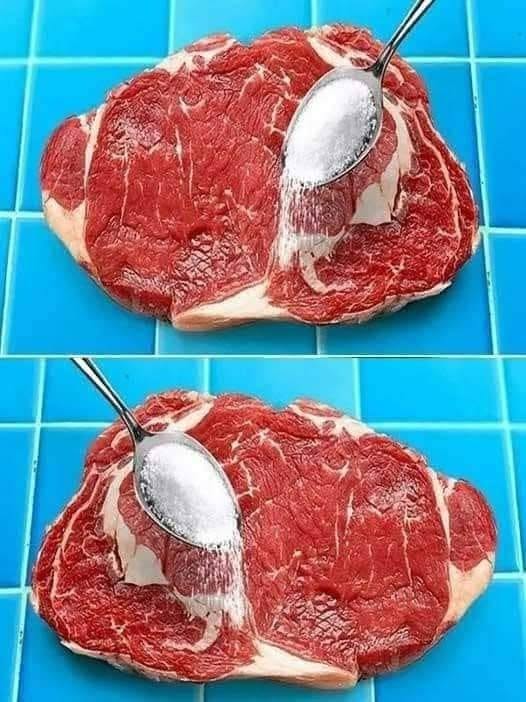
Baking soda (sodium bicarbonate) is alkaline — meaning it raises the pH on the surface of the meat.
Here’s what happens when you apply it:
1. Raises surface pH
Creates a more alkaline environment
2. Denatures proteins
Loosens muscle fibers, preventing them from tightening during cooking
3. Retains moisture
Helps meat hold onto water, staying juicy even when cooked quickly
 Result: More tender, moist meat — especially helpful for lean, quick-cooked cuts like stir-fries or grilled chicken breasts.
This technique is widely used in Chinese stir-fry recipes, where it’s part of a “velveting” process that keeps meat soft and silky.
Best Meats to Tenderize with Baking Soda
Not all meats need this treatment — but these benefit the most:
Chicken breast
Lean and prone to drying out — baking soda helps retain moisture
Pork chops (thin-cut)
Prevents toughness in high-heat cooking
Flank steak or skirt steak
Makes naturally chewy cuts more tender
Salmon fillets
Keeps delicate fish moist under high heat
Ground meat (for stir-fries)
Improves texture and juiciness
 Ideal for dishes that cook quickly at high heat, like stir-fries, grilling, or sautéing.
 How to Use Baking Soda to Tenderize Meat (Step-by-Step)
 Ingredients
1 lb (450g) meat, sliced thin (¼–½ inch thick)
¾ tsp baking soda (for every 12 oz / 350g of meat)
1–2 tbsp water (optional, for even coating)
 Never exceed 1 tsp per pound — too much causes soapy taste and mushy texture.
Instructions
Slice the meat thinly
Cut against the grain for maximum tenderness.
Coat with baking soda
Sprinkle baking soda evenly over meat.
Add a splash of water if needed to help it stick.
Toss gently to coat all pieces.
Rest for 15–20 minutes
Let sit at room temperature (don’t exceed 20 mins — risk of mushiness).
Rinse thoroughly
Rinse under cold water until no slippery residue remains.
This step is crucial — removes excess soda and prevents off-flavors.
Pat dry
Use paper towels to remove moisture before cooking.
Cook as usual
Stir-fry, grill, or pan-sear immediately.
Season normally — the meat will absorb flavors beautifully.
 Pro Tip: Combine with a marinade (soy sauce, garlic, cornstarch) after rinsing for restaurant-quality results.
Benefits of This Method
Fast tenderizing (under 20 mins)
No overnight marinating needed
Improves moisture retention
Less dryness in lean meats
Enhances texture
Especially useful for budget-friendly cuts
Low-cost & accessible
Uses pantry staple — no special tools
 Great for busy weeknights when you want restaurant-style results at home.
 Common Mistakes to Avoid
Using too much baking soda
Stick to ¾ tsp per pound — more isn’t better
Skipping the rinse
Leaves bitter, soapy taste
Leaving it on too long
Can make meat mushy or overly soft
Using on already tender cuts (like filet mignon)
Unnecessary — may degrade texture
 Not recommended for slow-cooked meats (e.g., pot roast), where natural collagen breakdown does the job.
 FAQs
FAQs
Is baking soda safe for meat?
Yes — when used correctly and rinsed off. The small amount used breaks down during cooking and poses no health risk.
Can I use baking powder instead?
No — baking powder contains acid and won’t raise pH effectively. Use baking soda only.
Does it change the flavor?
Only if not rinsed well. Properly rinsed meat tastes normal — just juicier and more tender.
Can I combine it with a marinade?
Yes! But apply baking soda first, then rinse and marinate — don’t mix them directly.
Final Thoughts
You don’t need fancy equipment or expensive cuts to cook tender, juicy meat.
Sometimes, the best tool in your kitchen isn’t a knife or thermometer —
it’s a $2 box of baking soda.
Used wisely, it transforms ordinary meals into something extraordinary — with less effort and better results.
So next time you’re prepping chicken or steak…
give it a sprinkle.
Wait 15 minutes.
Rinse.
Cook.
And take one bite —
you’ll taste the difference.
Because real flavor doesn’t come from secrets.
It comes from knowing the science behind the sizzle.